






Quick Summary
Key takeaways from this guide
- Under Approved Document Part L, target air permeability limits have tightened to 5 m³/(h·m²) at 50 Pa, making airtight sealing mandatory for plot handover.
- Over 80% of air test failures occur at hidden junctions: skirting floor perimeters, window reveals, and M&E riser service penetrations.
- Pre-test mastic sealing avoids costly re-test fees, delayed EPC certification, and stalled buyer completion dates.
- CSCS and CITB SSSTS certified operatives mobilize rapidly across the North West and UK for proactive sealing and emergency test-day remediation.
- Send plot schedules or site drawings to Liam for fixed per-plot air sealing rates and guaranteed handover compliance.
Why plots and commercial buildings fail Part L air permeability pressure tests
01Under Approved Document Part L of the UK Building Regulations, every new-build dwelling and commercial building must pass an air permeability pressure test before plot sign-off, Energy Performance Certificate (EPC) issuance, and legal handover can proceed.
Under the latest Building Regulations, target air permeability standards have tightened significantly—typically requiring results of $le 5 ext{ m}^3/( ext{h}cdot ext{m}^2) ext{ at }50 ext{ Pa}$ or lower depending on the SAP energy calculation. Unsealed micro-gaps around skirtings, window reveals, and service risers allow air to leak rapidly through the building envelope.
When air tightness sealing is left to the day before the test or bodged with shrinking painter's caulk, plots fail. The result: costly re-test fees, delayed handover dates, and frustrated buyers. Pre-test mastic sealing by an accredited contractor guarantees first-time compliance.
Top 5 hidden air leakage paths on new-build sites
02Air leakage always follows the path of least resistance. Our testing teams target these five critical air leakage vectors on every plot:
| Building Junction | Air Leakage Risk Factor | Where Air Bypasses | Required Sealant Specification |
|---|---|---|---|
| Skirting Board to Subfloor Perimeters | Severe (causes over 50% of domestic test failures) | Air escapes beneath plasterboard into external cavity walls and timber floor voids | Continuous low-modulus elastomeric perimeter bead sealed directly to subfloor before carpet/LVT |
| Internal Window & Door Reveal Cavities | High | Draughts track around UPVC/aluminium frame fixing brackets into cavity closers | Airtight flexible acrylic or low-modulus neutral silicone linking frame directly to plasterboard |
| M&E Risers, Soil Stacks & Pipe Penetrations | Critical | Direct chimney effect between floor levels, ceiling voids, and unheated loft spaces | High-density air barrier intumescent mastic and acoustic collar seals around all pipe collars |
| Drylining Head Tracks & Deflection Heads | High (particularly in multi-storey apartments) | Air bypasses suspended ceilings above partition tracks into ceiling plenums | Part E and Part L compliant flexible acoustic and air tightness mastic bead along head tracks |
| Kitchen Units & Bathroom Vanity Voids | Moderate to High (often missed behind kickboards) | Unsealed waste pipe and copper tail penetrations through external drywall | Full barrier sealing behind kitchen base units, bath panels, and boiler cupboards before fit-out |
The pre-test mastic sealing checklist for Site Managers
03To guarantee first-time air test passes, complete these checks before the air pressure testing engineer arrives on site:
1. Floor perimeters: Ensure the junction between the bottom of the plasterboard/skirting and the concrete slab or timber subfloor is sealed continuously with zero gaps.
2. Service cupboards: Check behind boiler casings, electrical consumer units, soil vent pipes, and underfloor heating manifolds.
3. Window boards: Verify that the underside of internal window boards is sealed to the brickwork or block reveal.
4. Sanitary fixtures: Ensure soil pipes behind boxing and waste traps under shower trays are sealed to the wall board.
Send photos for a fixed quote.
Whether you need bathroom silicone resealed mould-free, tile regrouting, window perimeters sealed, or commercial movement joints, Liam confirms a fixed price from photos before you book — backed by our 5-year guarantee.
Emergency remedial air test response: Same-day site attendance
04Has a plot or commercial unit just failed its air permeability test? Don't panic.
Our CSCS and CITB SSSTS certified mastic operatives provide emergency rapid remedial air sealing across Manchester, Liverpool, Cheshire, Lancashire, and the North West.
We attend site with calibrated smoke pencils to pinpoint active air leakage paths under depressurisation, seal the breaches with fast-curing elastomeric air barrier mastics, and coordinate with the testing engineer for immediate re-testing on the same visit.
Contracting Part L air sealing with Next Level Sealants
05We offer fixed per-plot and commercial linear metre rates for new-build developments across the North West and UK.
Send your site plot schedule, floor plans, or air test specification to Liam for an itemised commercial quotation.

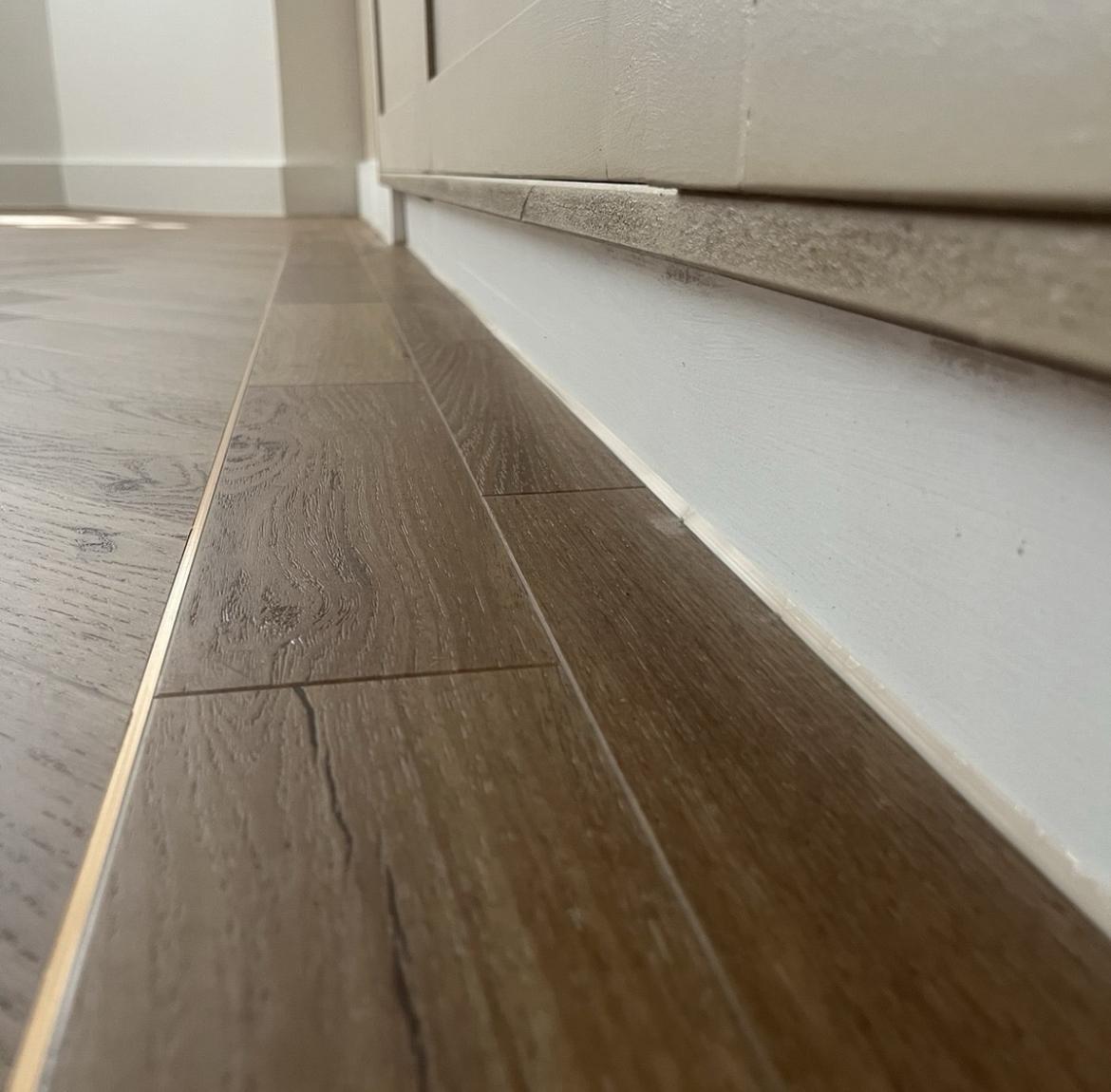
Completed by Next Level Sealants
See more of our domestic & commercial project albums
FAQ
Frequently Asked Questions
Can you attend site quickly if a plot fails an air permeability test?+
Yes. Our in-house commercial teams cover Greater Manchester, Liverpool, Cheshire, and the North West daily. We can mobilise same-day or next-day for emergency smoke-testing and remedial air sealing.
Why does painter's caulk fail Part L air tests?+
Standard decorator's caulk is water-based and shrinks by up to 30% as it dries, opening micro-cracks along skirting boards. Under 50 Pa air pressure testing, caulk cracks rupture and leak air. We use permanently flexible elastomeric air-barrier sealants that do not shrink.
Do you seal behind kitchen units and bath panels?+
Yes. Hidden penetrations inside kitchen base units, utility cupboards, and under bath boxing are the most common failure points. We ensure all pipe collars and subfloor perimeters are sealed before final fittings are installed.
What air permeability score is required under Part L?+
Under current Part L Building Regulations, maximum allowable air permeability is 8 m³/(h·m²) at 50 Pa for dwellings, but modern SAP calculations typically specify design targets between 3.0 and 5.0 m³/(h·m²) at 50 Pa to achieve EPC compliance.
Do you supply RAMS and CSCS cards for Tier 1 residential sites?+
Yes. 100% of our operatives carry CSCS cards, site supervisors hold CITB SSSTS, and we issue full site-specific RAMS and COSHH documentation prior to site start.
How are new-build air sealing packages priced?+
We price new-build housing sites on a fixed per-plot rate (e.g. per 2-, 3-, or 4-bed house type) or per linear metre for multi-unit apartment and commercial schemes.
How do I book pre-test air sealing for my site?+
Send your plot schedule, floor plans, and target test dates to Liam on WhatsApp or via our quote form for a fast, competitive commercial quotation.