






Quick Summary
Key takeaways from this guide
- Tile grout belongs exclusively between flat tiles on the same plane; flexible sanitary silicone must be used at all corners, tray rims, and movement junctions.
- If black mould, peeling, or water leaks are confined to the bottom edge around your bath or shower tray, a standalone silicone replacement solves it completely.
- If the grout lines across your shower walls are powdery, cracked, or stained black, machine raking out and regrouting combined with fresh silicone restores the room in a single day.
- A specialist regrout and reseal package costs £180–£350, saving you £3,000–£7,000 compared to tearing off sound tiles for a full bathroom refit.
- All Next Level Sealants domestic resealing and regrouting work across the North West includes our 5-Year Domestic Guarantee against mould and leaks.
The quick diagnostic: How to tell what your bathroom actually needs
01Before you spend thousands ripping out a bathroom or calling out tilers, check where the failure is actually happening. Tile grout and sanitary silicone perform two completely different jobs in wet environments.
Grout is rigid and cementitious; it sits exclusively between flat tiles on the same wall or floor plane. Silicone is a flexible elastomer; it sits in every internal corner and around the perimeter rim of baths, shower trays, basins, and vanity units.
Here is the simple diagnostic rule: If the black mould or peeling is confined to the bead around your shower tray, bath edge, or screen, you only need a silicone reseal. If the grout lines across the wall are powdery, missing, crumbling, or permanently stained, you need tile regrouting. If both are failing, a combined 1-day restoration will make your bathroom look newly fitted at a fraction of the cost.
Regrouting vs silicone resealing at a glance
02Use this quick comparison table to identify your exact symptoms and the most cost-effective treatment:
| Problem or Symptom | Root Cause | Correct Treatment | Typical Time & Benefit |
|---|---|---|---|
| Black mould or peeling along bath or shower tray rim | Old silicone has lost adhesion and biocide has expired | Full silicone strip-out, anti-fungal decontaminate, and sanitary reseal | 2–3 hours. Stops water leaks and gives a pristine, guaranteed mould-free finish |
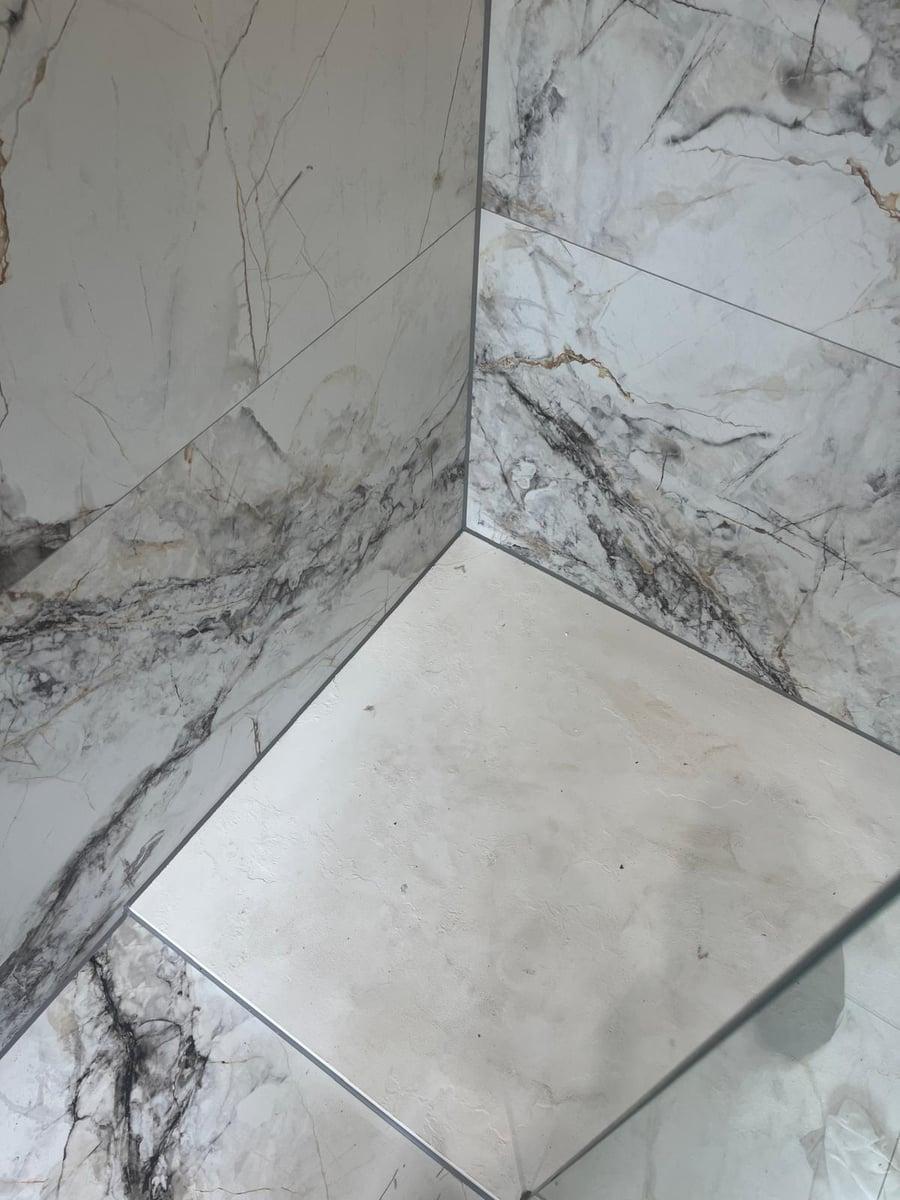
| Cracked vertical corner where two tiled shower walls meet | Inexperienced installer ran rigid grout into an active movement junction | Rake out corner grout and replace with flexible sanitary silicone | 1–2 hours. Accommodates building settlement and wall movement without splitting |
| Crumbling, powdery, or discoloured grout across shower walls | Water erosion, aggressive chemical cleaners, or porous cement breakdown | Machine rake-out to 3mm depth and repoint with polymer waterproof grout | 4–6 hours. Restores full structural waterproofing across tile joints |
| Water leaking into ceiling or room below during showers | Water tracking through failed perimeter silicone or cracked corner grout | Combined tile regrout and perimeter silicone reseal package | 1 day. Cures active leaks immediately without ripping off sound tiles |
| Tiles sound hollow when tapped or move when pressed | Substrate failure; adhesive debonded or moisture rotted the backing plasterboard | Tile replacement and backing board repair required before sealing | Substrate repair required. Regrouting alone cannot secure loose or hollow tiles |
The fatal bathroom mistake: Why grout always cracks in corners
03The single most common defect we see across North West bathrooms is rigid tile grout packed into the vertical corners of shower cubicles or along the top edge of a bath or shower tray.
Bathrooms are dynamic environments. When an acrylic bath fills with 150 litres of warm water, or a homeowner steps into a shower enclosure, the tray and floor joists flex under weight. Thermal expansion from hot water and room heating causes walls and trays to move at different rates.
Because grout has zero elasticity (under 1% movement tolerance), rigid grout in these junctions cracks almost immediately. Even a hairline fissure acts as a capillary siphon, drawing litres of shower water behind the tiles with every shower. These active junctions must always be raked out and sealed with high-grade, flexible sanitary silicone with ±25% movement capability.
Send photos for a fixed quote.
Whether you need bathroom silicone resealed mould-free, tile regrouting, window perimeters sealed, or commercial movement joints, Liam confirms a fixed price from photos before you book — backed by our 5-year guarantee.
Why regrouting and resealing saves £1,000s over a full bathroom refit
04When a bathroom starts looking tired, grimy, or leaky, homeowners often assume their only option is a complete bathroom replacement costing £4,000 to £10,000. In reality, sound ceramic and porcelain tiles do not wear out—the cement joints and perimeter silicone around them do.
A professional regrouting and resealing package restores the room in a single day for between £180 and £350. We mechanically extract the old, discoloured grout to a uniform 3mm depth, treat the joints with anti-fungal wash, repoint with mould-resistant polymer grout, and apply razor-sharp sanitary silicone beads.
You avoid weeks of builders stomping through your house, skip permits, plumbing disruption, and ruined plasterboard—while restoring full waterproofing and a showroom finish.
When regrouting is not enough: The hollow tile check
05Regrouting is a cosmetic and waterproofing restoration for tiles that are still firmly adhered to sound walls or floors. It cannot fix structural backing failure.
To test your tiles, firmly tap across the shower wall with your knuckles. A solid tile produces a crisp, dull click. A hollow, echoing thud or any visible movement when pressed indicates that the tile adhesive has debonded or the plasterboard behind has softened from long-term water seepage.
If tiles are loose or falling away, the damp section of wallboard must be cut out and repaired before new tiles can be set and grouted. If your tiles are firmly bonded, regrouting and resealing will completely solve your issues.
The specialist 5-step restoration process
06A lasting bathroom restoration requires specialist tools and sterile surface preparation that general handymen and DIY kits cannot replicate:
1. Mechanical extraction: We use oscillating diamond-tipped tools to remove old grout to a minimum 3mm depth without chipping fragile tile glaze.
2. Industrial decontamination: Grout channels and perimeters are sterilised with hospital-grade biocidal washes to eliminate deep-seated mould mycelium.
3. High-performance repointing: Joints are packed with flexible, polymer-modified waterproof grout engineered for power showers and steam rooms.
4. 100% Silicone strip-out & solvent clean: Old perimeter silicone is cut back to bare substrate and wiped clean with non-greasy degreasing solvents.
5. Tooling & guarantee: Premium anti-fungal sanitary silicone is extruded and shaped with specialist profiling spatulas, backed by our 5-Year Domestic Guarantee.
Need your shower or bathroom inspected? Get a fixed price from photos
07You do not need to take time off work for an in-person assessment. Send 2 or 3 clear photos of your shower enclosure, bath perimeter, or tiled walls along with your postcode on WhatsApp or via our quote form.
Liam will review the images, tell you plainly whether you need a simple silicone reseal, full regrouting, or both, and confirm a guaranteed fixed price before booking.
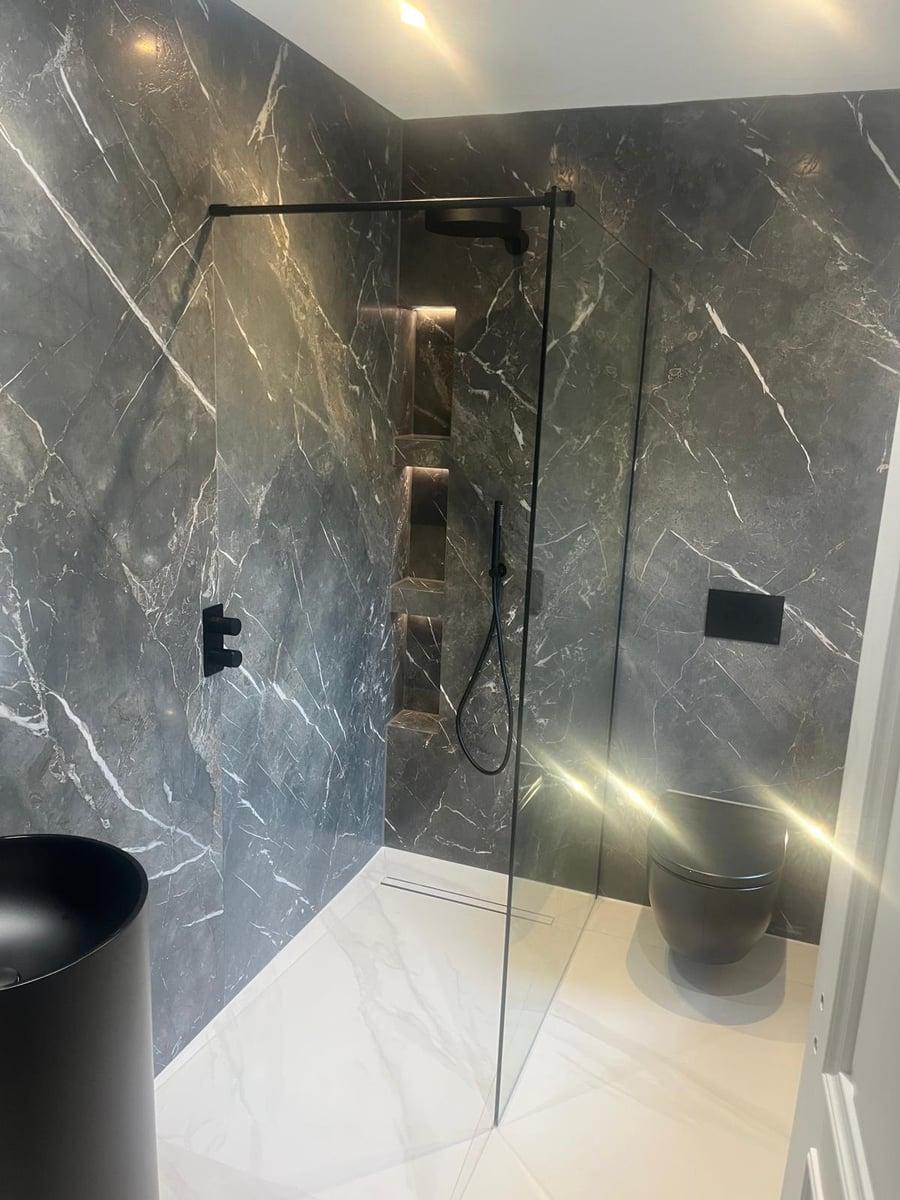
Completed by Next Level Sealants
See more of our domestic & commercial project albums
FAQ
Frequently Asked Questions
Should shower corners be grouted or siliconed?+
Internal corners where two tiled walls meet, and the bottom perimeter where tiles meet a shower tray or bath, are active movement joints. They must always be sealed with flexible sanitary silicone, never rigid grout. Grouting corners will crack and leak within weeks.
How much does bathroom silicone resealing and regrouting cost?+
A standard bath or shower tray silicone removal and reseal typically ranges from £90 to £180. A full shower enclosure regrout combined with new perimeter silicone resealing generally ranges from £180 to £350, depending on shower size and tile dimensions. We confirm an exact fixed price from photos before booking.
How long does a bathroom regrout and reseal take?+
A standalone silicone reseal takes 1.5 to 3 hours. A complete shower enclosure regrout and reseal takes between 4 and 6 hours. Work is completed in a single day with minimal disruption.
Can regrouting and resealing stop a shower leaking through the ceiling?+
Yes, in the vast majority of cases. Over 85% of bathroom ceiling leaks are caused by water penetrating failed tray perimeter silicone or cracked corner grout, rather than burst internal copper pipes. Resealing and regrouting cures these leaks immediately.
Can you grout over old grout?+
No, never. Applying a thin 'skim' of fresh grout over old grout will not bond and will flake off within weeks. Old grout must be mechanically raked out to a depth of at least 2–3mm to give the new waterproof grout sufficient bed depth to anchor permanently.
Why does my shower silicone keep going black with mould?+
Mould grows on silicone when cheap DIY sealant without active fungicides is used, when the joint is smoothed with soapy water (leaving an organic film), or when new silicone was applied over old damp sealant. Our commercial-grade biocidal silicones and sterile preparation prevent mould for years.
How long after regrouting and sealing can I use the shower?+
We recommend waiting 24 hours after completion before using the shower or bath. This allows the polymer grout and sanitary silicone to cure completely through the bead, ensuring maximum waterproof adhesion.
Do I need to be home for an in-person quote?+
No. Simply take 2 or 3 clear photos of the shower or bath and send them to Liam on WhatsApp. We can diagnose what is needed and provide an exact fixed price within minutes.