






Quick Summary
Key takeaways from this guide
- Building façade movement joints endure heavy wind sway, thermal expansion, and direct solar radiation, requiring periodic inspection every 5 years.
- The 6 key signs of façade sealant failure are adhesive peel, centre-line splitting, UV crazing, joint bulging, internal damp, and panel staining.
- Skimming new mastic over failed cladding seals traps moisture behind panels, accelerating bracket corrosion and causing repeat leaks.
- Remedial façade resealing protects insulation, sub-frame aluminium brackets, and interior finishes from multi-million pound water damage.
- Next Level Sealants delivers full commercial façade inspections and remedial resealing via rope access and powered access nationwide.
Fixed Quotes From £150 · Zero Call-Out Fee
Need mouldy silicone stripped & resealed? Send 2 or 3 photos to Liam for a fixed price.
The vital role of façade expansion and weatherseal joints
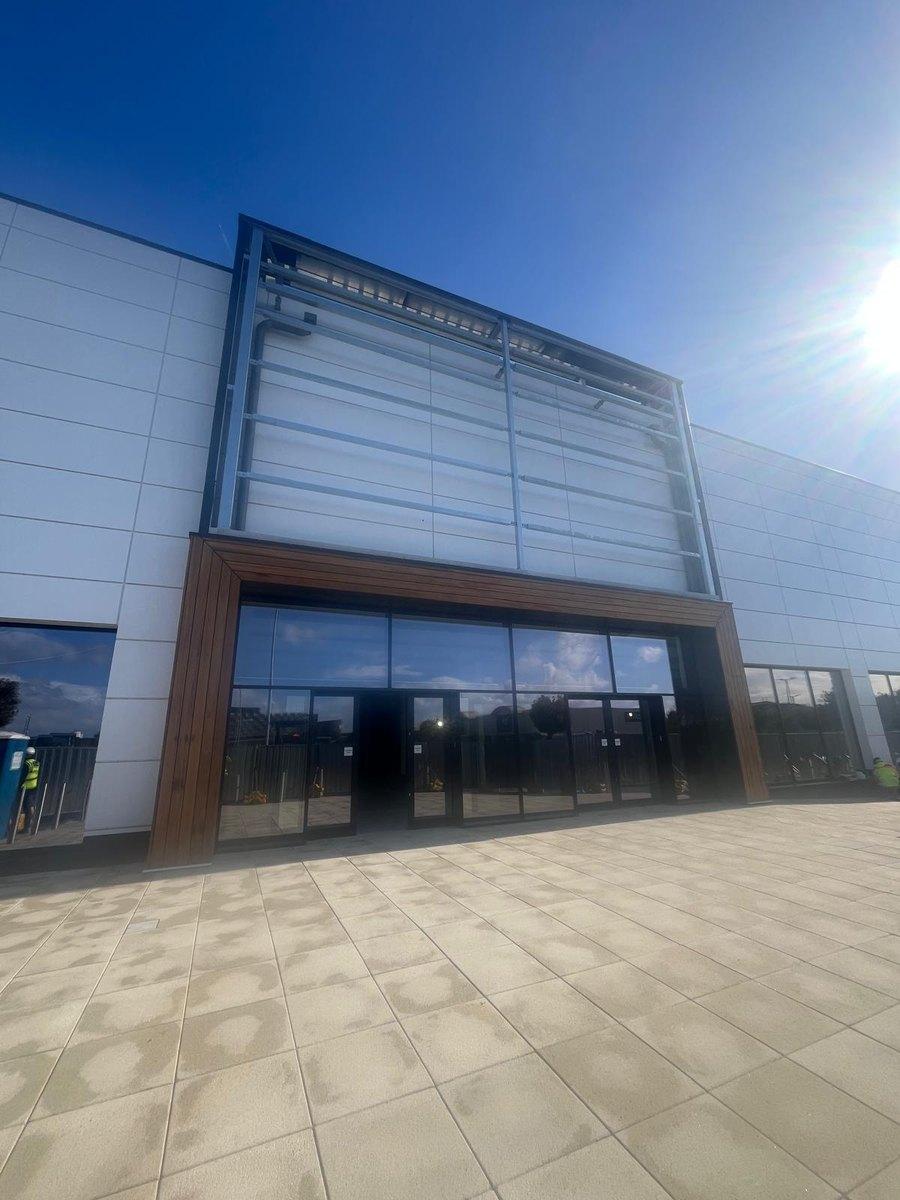
01Commercial building façades—whether constructed from aluminium composite rainscreen panels, architectural precast concrete, structural glazing curtain walling, or brick slips—are designed to move.
A 50-metre commercial building elevation expands and contracts significantly between winter freezes and summer heatwaves, while wind pressure causes continuous micro-deflections across panel joints. Elastomeric façade joint sealants are the only barrier keeping wind-driven rain, atmospheric pollution, and air infiltration out of the building envelope.
When façade sealant breaks down, water penetrates the rainscreen cavity, saturates mineral wool insulation, corrodes structural aluminium brackets, and causes interior damp staining that can cost hundreds of thousands of pounds to rectify.
The 6 critical warning signs of façade sealant failure
02Building surveyors and facilities managers should inspect commercial façades every 3 to 5 years for these six primary failure modes:
| Failure Mode | Visual Appearance on Façade | Structural & Water Risk | Remedial Trade Action Required |
|---|---|---|---|
| 1. Adhesive Debonding | Sealant bead has pulled cleanly away from panel edge or masonry reveal | Direct water ingress path into the rainscreen cavity behind cladding | Complete joint cut-out, mechanical grind/clean, substrate primer, and reseal |
| 2. Cohesion Splitting | Continuous crack or tear running straight down the centre of the silicone bead | Sealant has exceeded its movement limit; allows rain to penetrate under wind pressure | Rake out, install correct-diameter foam backing rod (2:1 ratio), and apply Class 25LM sealant |
| 3. UV Hardening & Crazing | Surface of the sealant appears chalky, cracked like crocodile skin, and brittle | Polymer breakdown from sunlight; elasticity destroyed, joint will tear at next freeze | Full extraction of degraded material and replacement with UV-stable neutral silicone or MS polymer |
| 4. Joint Squeeze & Bulging | Sealant protrudes outward like a tyre or is extruded past the panel surface | Joint too narrow for building thermal expansion; sealant tears off bond line under tension | Re-engineer joint geometry with backing rod; re-profile flush with cladding chamfer |
| 5. Water Staining on Cladding | Dark streaks or efflorescence leaching from horizontal panel transoms | Water is pooling inside cavity insulation and washing mineral salts through joints | Urgent façade survey; replace failed horizontal weatherseals and inspect cavity trays |
| 6. Internal Tenant Water Staining | Damp patches on perimeter ceilings, perimeter columns, or drywall reveals | Water has breached both the primary rainscreen and secondary building weather line | Emergency high-level leak tracing and targeted remedial resealing via rope access or MEWP |
Why façade sealants fail prematurely
03High-grade façade sealants are engineered to last 15 to 20 years. When they fail in under 5 years, poor original installation is almost always the cause:
1. Three-sided adhesion: The installer failed to fit closed-cell polyethylene backing rod. The sealant bonded to the bottom of the channel as well as both sides, preventing it from stretching like an elastic band and causing immediate centre-line tearing.
2. Unprimed substrates: Porous concrete panels or coated aluminium extrusions were not chemically primed, causing early adhesive unbonding.
3. Incompatible chemistry: General-purpose acetoxy silicone was used instead of low-modulus neutral cure silicone (ISO 11600 Class 25LM), causing acid corrosion and brittleness.
Send photos for a fixed quote.
Whether you need bathroom silicone resealed mould-free, tile regrouting, window perimeters sealed, or commercial movement joints, Liam confirms a fixed price from photos before you book, backed by our 5-year guarantee.
The hidden financial cost of trapped cavity moisture
04A failed façade seal rarely stays a simple joint issue. Rainwater penetrating rainscreen cladding saturates cavity fire barriers, dampens non-combustible insulation quilts (drastically reducing building thermal efficiency), and corrodes structural aluminium bracket fixings.
By the time internal damp stains appear on tenant office floors, the underlying repair costs have multiplied tenfold. Proactive façade sealant surveys and targeted remedial resealing protect your building's structural integrity and commercial asset value.
The specialist commercial façade resealing process
05Our façade specialists execute a methodical remedial engineering process:
First, all failed sealant and decomposed backing materials are mechanically extracted and collected to protect ground areas. Second, panel edges are cleaned using industrial solvent wipes to remove atmospheric grime and oxidation.
Third, correct-diameter closed-cell backing foam is inserted to set the required width-to-depth joint ratio. Finally, a certified ISO 11600 Class 25LM low-modulus neutral cure silicone or MS polymer is extruded and tooled with concave weather-shedding profiles.
Book a commercial façade inspection and tender
06Next Level Sealants delivers comprehensive commercial façade inspections and remedial resealing packages nationwide.
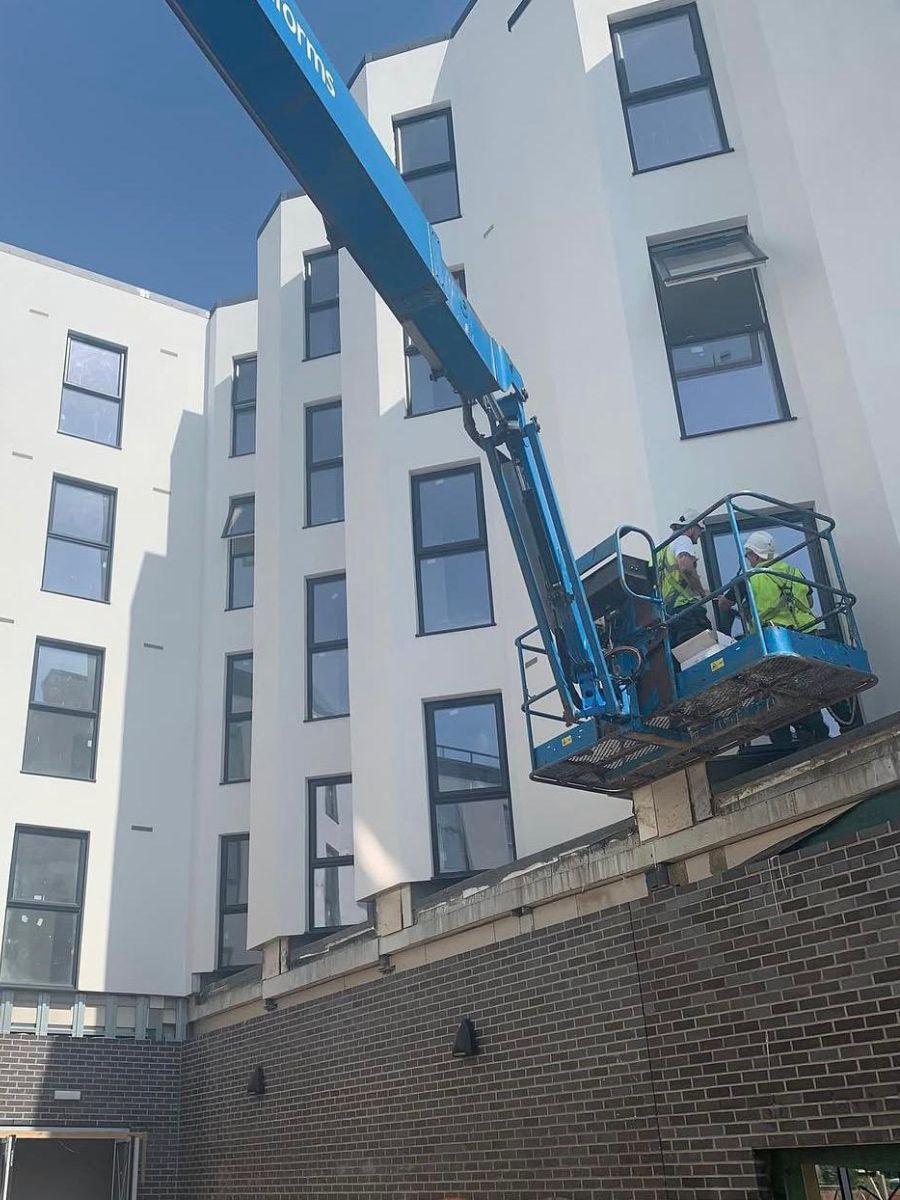
Whether accessed via our in-house IRATA Level 3 rope access technicians or IPAF-certified boom platforms, we deliver zero-defect results with minimum disruption.
Send your site address and elevation photos to Liam on WhatsApp or via our quote form for fast commercial tender turnaround.
Completed by Next Level Sealants
See more of our domestic & commercial project albums
FAQ
Frequently Asked Questions
How often should commercial building façades be resealed?+
High-performance commercial façade sealants typically last 15 to 20 years. However, visual condition inspections should be conducted every 3 to 5 years, particularly on south-facing and high-wind elevations.
Can you match the exact colour of our cladding panels?+
Yes. We supply premium architectural sealants (including Sika, Dowsil, and Otto-Chemie) in hundreds of RAL colour matches, textured stone finishes, and matte profiles to ensure seamless architectural continuity.
Can you reseal commercial façades without scaffolding?+
Yes. Our IRATA Level 3 rope access technicians and IPAF-certified MEWP operators complete targeted façade resealing without the enormous expense and disruption of full scaffolding.
What causes centre-line splitting in façade mastic?+
Centre-line splitting (cohesion failure) is almost always caused by three-sided adhesion (missing foam backing rod) or using a sealant with insufficient movement accommodation for the thermal expansion of the panels.
Do you supply photographic QA records for building handover?+
Yes. We provide complete pre- and post-repair photographic records, joint dimension logs, and manufacturer batch numbers for building surveyors and principal contractor sign-off.
What insurance coverage do you provide for commercial façade work?+
We hold £5m Public Liability and £10m Employers Liability insurance that explicitly covers high-level building envelope work and industrial rope access with no height restrictions.
How do I request a façade survey and quote?+
Send photos of your building elevations, panel types, and site location to Liam via our quote form or WhatsApp. We provide prompt technical advice and itemised commercial tenders.