






Quick Summary
Key takeaways from this guide
- Over 80% of upper-floor commercial window leaks stem from perimeter mastic failure rather than the double-glazed unit itself.
- Thermal expansion on high-rise curtain walling can exceed 10mm per frame; standard rigid silicones tear within 2 to 3 years.
- Failed window seals track rainwater into cavity insulation, rotting plasterboard, and damaging tenant finishes on floors below.
- IRATA rope access allows our specialist mastic applicators to replace perimeter mastic at any height without disruptive scaffolding.
- Every commercial window reseal package includes mechanical extraction, ISO 11600 neutral cure silicone, and full warranty documentation.
Fixed Quotes From £150 · Zero Call-Out Fee
Need mouldy silicone stripped & resealed? Send 2 or 3 photos to Liam for a fixed price.
Why upper-floor commercial windows leak
01Water leaking through an upper-floor commercial window reveal or apartment frame is rarely caused by a failure of the double-glazed glass unit itself. In over 80% of cases, the culprit is failed external perimeter mastic.
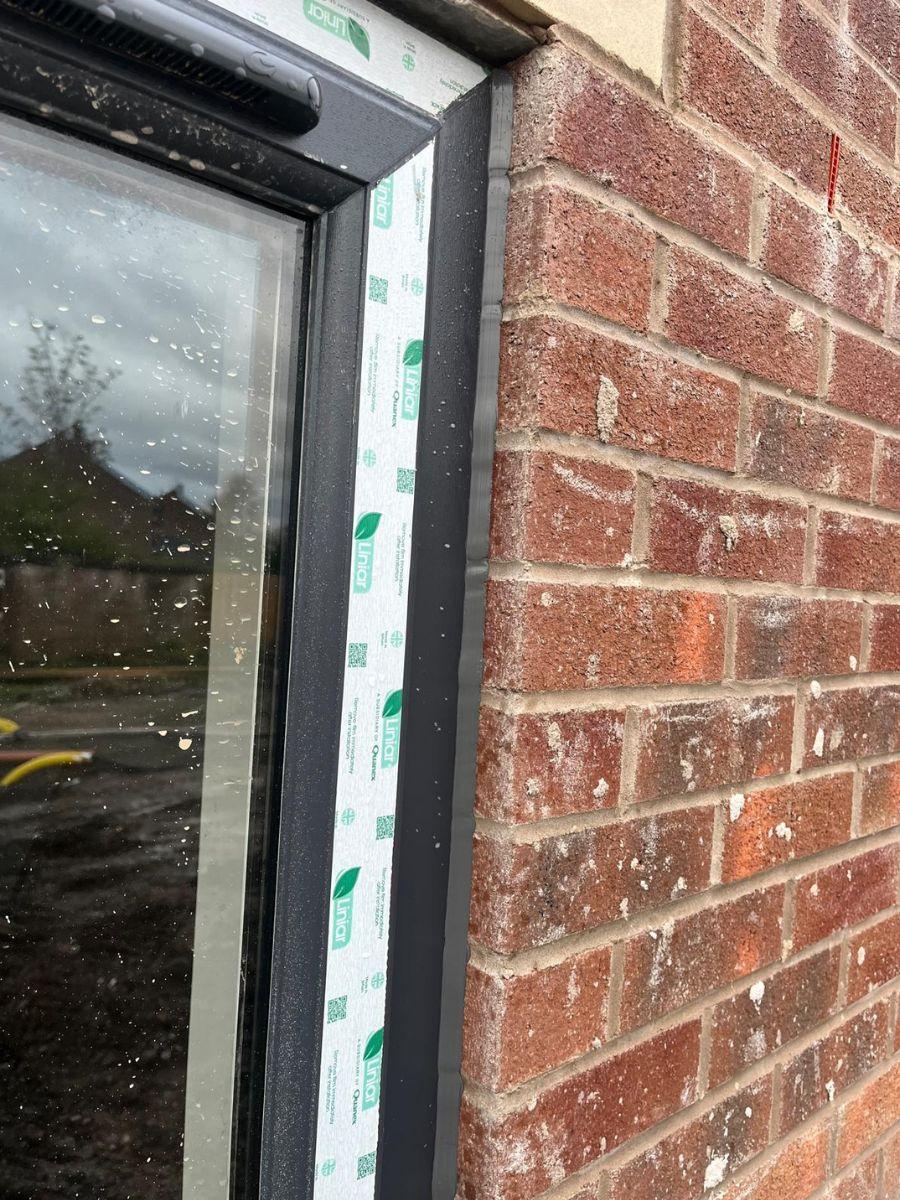
High-level windows face far more severe environmental loads than ground-floor windows. Wind-driven rain hits high-rise façades with hurricane-force pressure, forcing water upward against gravity and into micro-gaps. Intense solar UV radiation rapidly degrades uncertified sealants, while thermal expansion causes aluminium and UPVC frames to expand and contract by up to 10mm per joint.
When the perimeter sealant cracks or unbonds from the masonry, water penetrates directly into the cavity wall, running down internal structural steelwork and ruining ceiling tiles and tenant finishes several floors below.
Symptoms of high-level window perimeter failure
02Use this diagnostic table to determine whether your building is suffering from external perimeter mastic failure:
| Observed Symptom | Where Water Enters | Internal Impact | Required Remedial Solution |
|---|---|---|---|
| Damp stains or peeling paint on internal window head or reveal | Top horizontal or vertical jamb perimeter sealant has split or debonded | Water tracks down cavity, destroying plasterboard and blowing interior paint | 100% mechanical cut-out, closed-cell PE backing rod, and low-modulus silicone reseal |
| Water pooling on internal window cills during driving rain | Failed bottom perimeter mastic or blocked sub-cill drainage weep vents | Internal cill swelling, flooring damage, and water seepage to lower floors | Inspect weep vents; rake out cill perimeter mastic and replace with weather-lap bead |
| Cold draughts or whistling wind noises on breezy days | Perimeter mastic has lost cohesion, creating an air leakage channel | Severe thermal heat loss, high HVAC energy bills, and tenant acoustic complaints | External perimeter resealing to restore airtight building envelope (Part L compliance) |
| Visible black mould growth around inside window edges | Cold thermal bridging caused by rainwater trapped inside the window cavity | Unhealthy indoor air quality, tenant complaints, and structural damp | External weatherseal replacement combined with internal anti-fungal hygiene reseal |
Why internal silicone 'capping' fails every time
03A frequent and disastrous mistake made by in-house building maintenance teams is applying a bead of silicone along the inside of a leaking window frame.
This does not stop the leak—it traps it. Rainwater continues to enter from the outside, fills the cavity wall around the frame, rots the fixing brackets, rusts steel lintels, and eventually overflows into the wall cavity where it causes extensive, invisible structural damage.
A window leak must always be cured at the exterior weather line by completely stripping and replacing the external perimeter mastic.
Send photos for a fixed quote.
Whether you need bathroom silicone resealed mould-free, tile regrouting, window perimeters sealed, or commercial movement joints, Liam confirms a fixed price from photos before you book, backed by our 5-year guarantee.
Safe high-level access: Rope access vs MEWPs
04Replacing external window sealant on upper floors requires specialized working-at-height systems:
IRATA Industrial Rope Access: For multi-storey residential blocks, commercial towers, and city-centre offices with pedestrian pavements below, rope access is the fastest and most cost-effective method. Technicians rig from roof anchors, carry out the work with zero pavement obstruction, and derig daily.
IPAF Powered Access MEWPs: For retail parks, low-rise commercial offices, and schools with clear ground hardstanding, cherry pickers and boom lifts offer rapid horizontal mobility across full elevations.
The 5-step commercial window resealing process
05Our specialist applicators execute a zero-tolerance engineering process on every high-level window joint:
1. Mechanical extraction: All failed, weathered sealant is cut away from both the window frame and masonry reveal to bare substrate.
2. Solvent degreasing: Joints are wire-brushed, blown clean, and wiped with industrial fast-flashing solvent cleaners.
3. Backing rod insertion: High-density, closed-cell polyethylene foam backing rod is inserted into the void to establish the optimum 2:1 width-to-depth joint ratio and eliminate three-sided adhesion tearing.
4. Chemical priming: Porous masonry reveals or anodised aluminium frames are chemically primed where required by the manufacturer.
5. Tooling ISO 11600 Class 25LM weatherseal: Premium neutral cure silicone is extruded and shaped with a downward weather-lap profile to shed rainwater.
Request a high-level window inspection or tender
06Next Level Sealants delivers commercial window perimeter sealing packages across the North West and nationwide.
Send photos of your affected elevations, building address, and approximate number of window units to Liam on WhatsApp or via our quote form for fast technical advice and a fixed commercial tender.
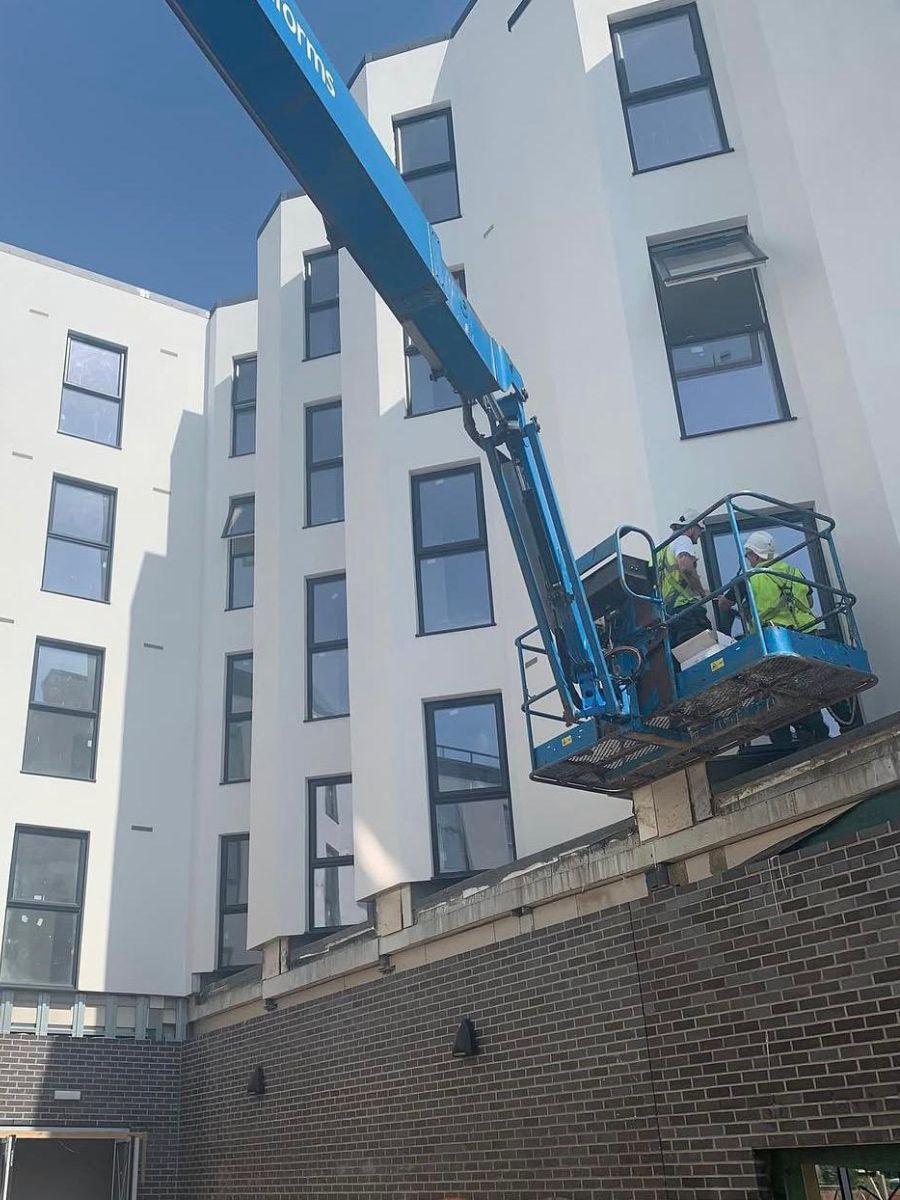
Completed by Next Level Sealants
See more of our domestic & commercial project albums
FAQ
Frequently Asked Questions
Can you reseal high-rise window frames without scaffolding?+
Yes. Our IRATA-certified industrial rope access teams replace external window perimeter mastic on high-rise residential and commercial towers without the expense, disruption, or security hazards of scaffolding.
How long does high-level window perimeter sealant last?+
When correctly installed with closed-cell backing rod and commercial low-modulus neutral cure silicone (ISO 11600 Class 25LM), external window sealant typically lasts 15 to 20 years in UK weather conditions.
Why can't we just seal the window from the inside?+
Sealing from the inside traps driving rainwater within the cavity wall and window frame profile. This causes hidden structural corrosion, saturated insulation, and extensive damp. External water ingress must always be cured at the outside face.
What sealant is best for external commercial window frames?+
Low-modulus neutral cure silicone (such as Dowsil 791 or SikaHyflex-250) or MS polymer hybrids are specified for commercial glazing. They offer ±25% movement accommodation, superior UV stability, and non-corrosive adhesion to UPVC, aluminium, and brick.
Can high-level window repairs be carried out on occupied buildings?+
Yes. Rope access and MEWP operations generate minimal noise and zero internal disruption. We coordinate floor-by-floor notices with building management so occupants remain fully informed.
What safety accreditations do your operatives hold?+
All operatives hold CSCS cards, CITB SSSTS supervision, IPAF PAL cards for powered access, PASMA for mobile towers, and IRATA Level 3 for industrial rope access, backed by £10m working-at-height liability insurance.
How do I get a quote for high-level window resealing?+
Send photos of your building elevations, window count, and site location to Liam on WhatsApp or via our website. We provide clear, itemised commercial tenders within 24 to 48 hours.